CHEF iQ AI Studio
Designing a platform that enables users to create and publish structured recipes within the CHEF iQ ecosystem.
Created for the internal CHEF iQ Studio Challenge, where the concept was awarded Second Prize.
Overview
CHEF iQ appliances rely on structured recipes to power guided cooking experiences. However, creating those recipes internally requires significant manual effort from the culinary and product teams.
This limits how quickly the recipe library can grow and makes it difficult to scale content across the platform.
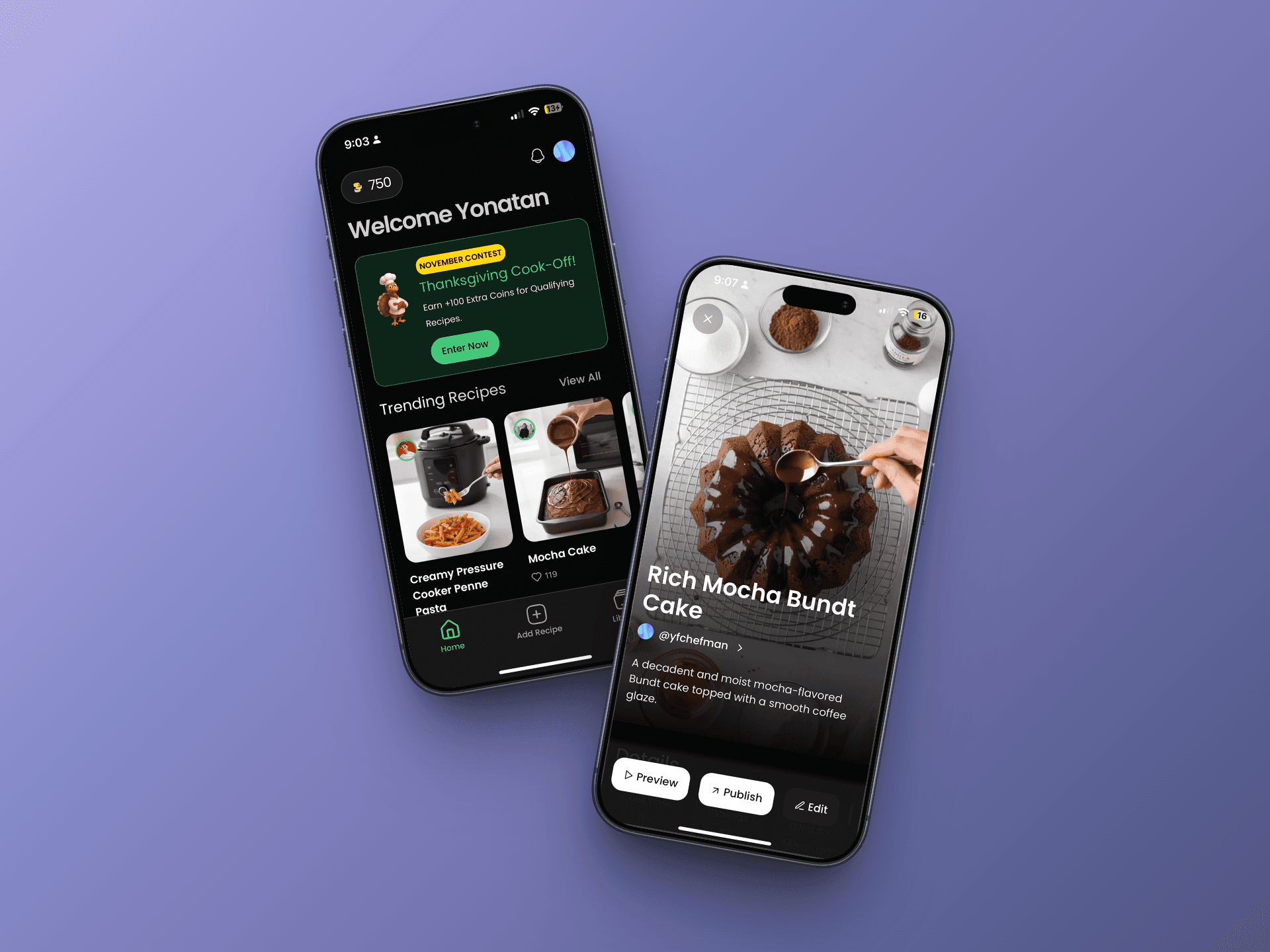
For the CHEF iQ Studio Challenge, I designed a concept platform that enables users to create, structure, and publish their own recipes within the CHEF iQ ecosystem.
The goal was to explore how user-generated content could expand the recipe library while maintaining the structured data required for connected cooking.
My Role
I owned the concept end-to-end, from defining the product opportunity to designing the core experience. This included:
Defining the creator workflow and system architecture
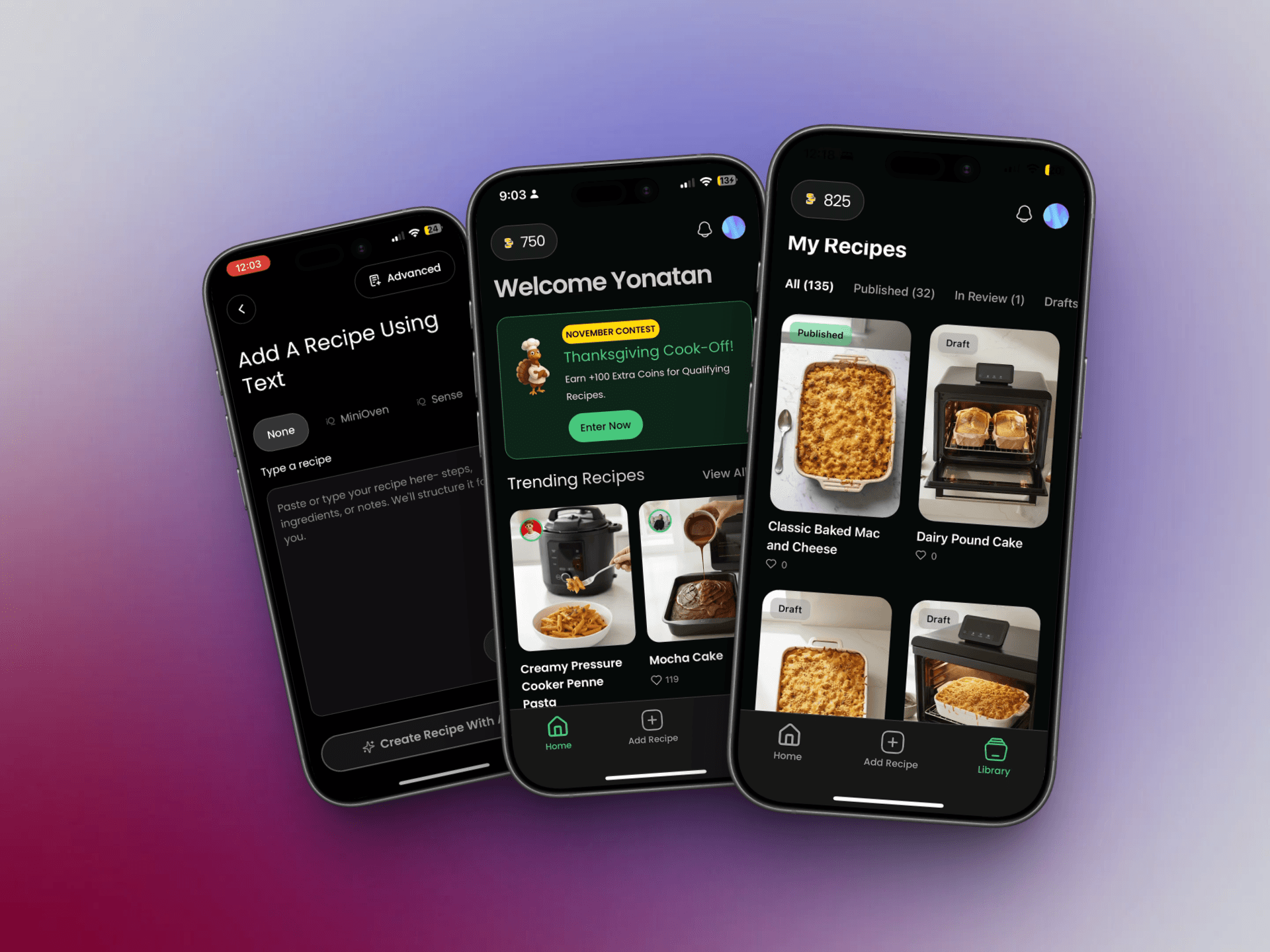
Designing input methods (text, voice, photo, camera roll)
Shaping the AI-assisted generation flow (recipes, images, video)
Designing the publishing, rewards, and community experience
The Problem
CHEF iQ relies on a growing library of structured recipes to power guided cooking. Creating that content internally is slow, expensive, and limited by team bandwidth.
User-generated content could solve the scale problem but introduces new risks:
Inconsistent quality
Unstructured or incomplete instructions
Poor visuals
Broken brand consistency
CHEF iQ needs more recipe content without losing the structure and quality the product depends on.
The Opportunity
CHEF iQ delivers guided cooking through connected appliances, but the platform relies on internally created recipes.
If users could create recipes directly within the ecosystem, the platform could unlock:
Community-generated recipes
Faster content expansion
Deeper engagement with connected appliances
New opportunities for discovery and sharing
This project explores how a creation platform could support both everyday users and more advanced creators.
Design Challenge
Recipes are typically written in free-form text, while connected appliances require structured instructions to power guided cooking.
The core challenge was designing a system that allows users to create recipes naturally while capturing the structured data needed for automated cooking.
The experience needed to balance a simple creation flow with the technical requirements of the platform.
Design Goals
To address these challenges, the experience focused on:
Supporting flexible recipe input through text, voice, and images
Converting raw input into structured, step-by-step recipes
Reducing effort through AI-generated images and video
Enabling publishing and discovery within the ecosystem
Encouraging ongoing creation through gamification and rewards
Key Design Decisions
Multiple Input Methods For Recipe Creation
Users can start a recipe using text, voice, photos, or imported content.
This removes the need to follow a rigid format upfront and allows users to begin from whatever they already have, whether it is a written recipe, a screenshot, or a spoken idea.
Converting Unstructured Input Into Structured Recipes
Raw input is transformed into a clear, step-by-step format that supports guided cooking.
Instead of requiring users to manually format their recipes, the system organizes ingredients, steps, and timing into a structured flow that aligns with connected appliance requirements.
AI-Generated Media To Reduce Content Friction
Images and videos are generated automatically to enhance each recipe.
This removes the need for manual photography or editing, allowing users to create visually rich content without additional effort while maintaining a consistent level of quality across the platform.
Publishing and Gamification To Drive Engagement
Users can publish recipes and earn rewards through engagement.
This introduces a feedback loop where creation leads to visibility and rewards, encouraging ongoing contribution and helping grow the recipe ecosystem.
Product Thinking
A key consideration in this concept was how user-generated recipes could integrate with CHEF iQ’s platform.
Unlike traditional recipe platforms, recipes for connected cooking must include structured data such as timing, temperature, and appliance states.
This concept explored how a creation platform could balance:
Creative flexibility for users
Structured data required for guided cooking
Scalable recipe generation for the platform
By enabling structured recipe creation, the system could allow user-generated recipes to support automated cooking experiences across CHEF iQ appliances.
Outcome
The concept was presented during the company-wide CHEF iQ Studio Challenge, where teams across the organization proposed new product ideas.
The project was awarded Second Prize, recognizing its potential to enable a user-generated recipe ecosystem within the CHEF iQ platform.
Reflection
This project shifted how I think about creation tools. The challenge was not just making it easy to create recipes, but making sure those recipes could actually work within the product.
It reinforced that the system should take on more of the complexity, rather than pushing it onto the user.
This was also my first time designing AI into a product experience, which required thinking beyond UI and into how the system interprets and structures content.
Presentation
View the original Studio Challenge presentation: